Comprehensive Cardiology Services
Below are just some of the cardiology areas that we specialize in. Included is Nuclear Cardiology, Echocardiography, Treadmill Stress Test, Holter Monitor, Cardiac Event Recorders, Implantable Loop Recorders, Pacemakers, and Cardiac Rehabilitation. Please contact our office for additional services and information. You may click the icons or quick links below for the various types of services or continue reading down this page.
Clinical Services
- Cardiac Stress Testing
- Echocardiography / Stress Echocardiogram
- Nuclear Myocardial Perfusion Scan
- Electrocardiogram (EKG)
- Electrophysiology
- Holter Monitoring
- Cardiac Event Recorder
- ABI
- Office Consultations
- Peripheral Vascular Studies
- Remote Patient Monitoring
- Second Opinions (review of medical records)
- Vein Clinic
Interventional Services
- Cardiac Catheterization (Angiogram)
- Peripheral Angiograms
- Carotid Angiograms
- Coronary Angioplasty
- Peripheral Angioplasty
- Transesophageal Echocardiogram (TEE) and Intracardiac ECHO (ICE)
- Venous Ablations and Sclerotherapy
Electrophysiology Services
- Device follow-up clinic
- Implantable Loop Recorders (ILR)
- Pacemaker and Defibrillator
- Cardioversions
- Cardiac Ablation
Vein Clinic
We are excited to announce the addition of our Vein Clinic to the Imperial Cardiac Center medical practice.
While vein disease is very common, the type and severity can vary. Understanding vein disease is a first step towards seeking treatment. Veins are thin-walled structures inside of which are valves that keep blood in the body flowing in one direction to return oxygen depleted blood back to the heart. Veins located close to the surface of the skin are called superficial veins and the veins found in the muscles of the arms and legs are called deep veins.
Damaged vein walls hinder the circulatory system, allowing blood to collect and flow in a retrograde (backward) fashion when the muscles relax. This pressure creates a buildup in the veins resulting in stretching and twisting of the veins, increased swelling, more valve incompetence, sluggish blood flow and potential blood clot formation. Eventually, this condition can lead to various disorders, some of which may be life-threatening if left untreated.
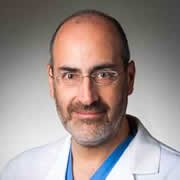
Sam Baradarian, MD
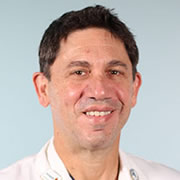
Steve Gottsfeld, PA
Our experienced staff, led by Dr. Sam Baradarian and Steve Gottsfeld PA, can help you understand your treatment options for a range of vein diseases, including:
- Varicose and Spider veins
- Chronic venous insufficiency (CVI)
- Ulcers
- Restless leg syndrome
- Leg swelling
- Leg cramps
- Leg heaviness
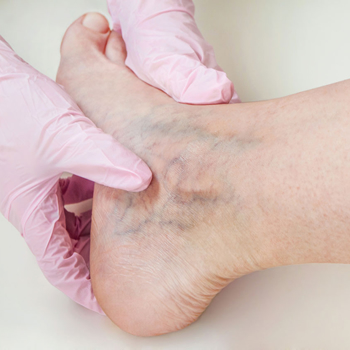
Several nonsurgical and surgical treatment options may be available for each of these types of vein diseases, with the goal to reduce symptoms and reduce the risk of complications.
Contact our office for more information, or to schedule an evaluation by calling (760) 355-8300 or via email at office@imperialcardiaccenter.com.
Clinical Services
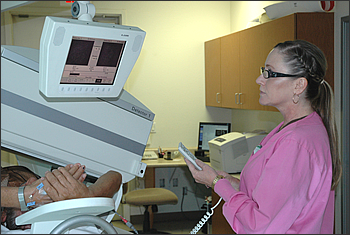
Nuclear Myocardial Perfusion Scan
A cardiac (heart) nuclear study is a test that uses a small dose of radioactive solution to track blood flow to the heart muscle, and to evaluate heart function.
We offer additional information on Nuclear Cardiology here.
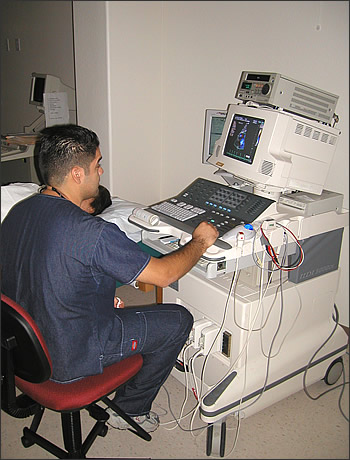
Echocardiography
An echocardiogram (echo) is a type of ultrasound examination that uses high-pitched sound waves sent through a device called a transducer to produce an image of the heart and sometimes the aorta.
An echocardiogram measures how well the heart is working by evaluating blood flow, heart valves, and heart size, thickness, shape, and muscle movement.
To learn more about echocardiograms, click here.
Or, you may download an Adobe Acrobat (PDF) document with Echocardiogram information (below).
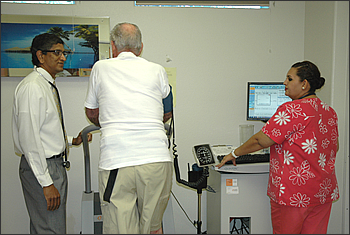
Treadmill Stress Test
Stress echocardiogram, in which the echocardiogram is done before and after the heart is stressed by exercise or medicine.
For more information on Treadmill Stress Tests, you can read about Adenosine Stress Test and Stress Echocardiogram by clicking these links.
Or, you may download an Adobe Acrobat (PDF) document with Treadmill Stress Test information (below).
Treadmill Stress Test information
Patient Procedure Preparation Information (in English and Spanish)
Interventional Services
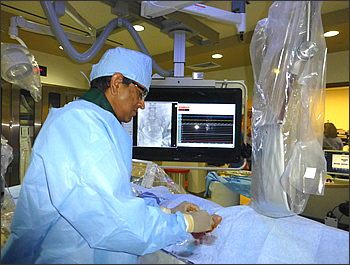
Cardiac Catheterization
Cardiac catheterization is a medical procedure we perform to diagnose and treat certain heart conditions.
A long, thin, flexible tube called a catheter is put into a blood vessel in your arm, groin (upper thigh), or neck and threaded to your heart. Through the catheter, your doctor can perform diagnostic tests and treatments on your heart.
We have additional information on Cardiac catheterization here.
Electrophysiology Services
Some heart rhythm problems come and go, so they rarely show up during a short office EKG. When symptoms such as palpitations, dizziness or fainting are hard to catch, longer-term heart monitoring helps your doctor see what your heart is doing at the moment you feel them.
Cardiac Event Recorder
A cardiac event recorder is a small, portable monitor you wear on your body, usually for up to 30 days. It records your heart rhythm when you press a button during symptoms, and many models also record automatically when they detect an abnormal rhythm.
The recordings are sent to our team for review, helping us diagnose irregular heartbeats that a standard EKG or a 24 to 48 hour Holter monitor may miss.
Implantable Loop Recorder (ILR)
An implantable loop recorder is a tiny heart monitor, about the size of a USB stick, placed just under the skin of the chest during a quick outpatient procedure with local anesthesia.
It continuously monitors your heart rhythm for up to several years and can transmit data remotely, making it useful for unexplained fainting, infrequent palpitations and detecting atrial fibrillation.
We also offer a device follow-up clinic, pacemaker and defibrillator care, cardioversions and cardiac ablation. Please contact us to learn which option is right for you.
Cardiac Rehabilitation & Wellness
A medically supervised exercise, nutrition and education program to help you recover and build a healthier heart after a cardiac event or procedure.